


-
Duration 46 Days
-
Level Intermediate to Advanced
-
Certification 500 Hour RYT - Yoga Alliance
-
Yoga Style Ashtanga, Vinyasa & Hatha
-
Language English
-
Date 1st of every month

500 Hour Yoga Teacher Training in Bali
a comprehensive advanced level yoga teacher training courseThe second month of this yoga instructor course is the 300-hour Yoga Teacher Training Program in Bali, where you will step into the world of advanced practice of asanas, pranayama and meditation. We focus on the Ashtanga Primary and Intermediate series, mastering the art of asanas. With an equal focus on advanced breathwork practices such as the ashta kumbhakas, bandhas and advanced meditation practices like yoga nidra, chakra meditation, you can find your passion and become an exceptional yoga teacher. You will learn yoga anatomy and alignment in great detail, understand the human body and its workings to optimise your practice and teach with precision. You can become a holistic yoga instructor with additional knowledge of courses like Ayurveda and sound healing.
With our 500-hour yoga teacher training course in Bali, you are set up for a successful career as a global yoga teacher. As you participate in this course, you will experience ancient wisdom, limitless possibilities and profound awakening. Take the first step towards becoming a yogi and guiding others through your light and learnings. Join our TTC in Bali now!
Begin your Journey
500 Hour Yoga Teacher Training Course Fees & Upcoming Dates - 2026Course Fee
Without Accomodation
Course Syllabus
500 Hour Yoga Teacher Training Course Syllabus200 Hour Yoga TTC Syllabus
- On 1st week - Introduction to Ashtanga yoga followed by Sun salutation A & B.
- On 2nd week - Standing sequence postures & use of yoga props.
- On 3rd week - Seated sequence postures & Finishing postures.
- On 4th week - Mysore style & Teaching practice.
1st Week -
- Pawanmuktasana series A
- Surya Namaskar (Hatha)
- Virbhadrasana A & B
- Utthita Trikona asana
- Parvakonasana
- Parivritta parsvakonasana
- Parsvaottanasana
Sitting Postures -
- Bhardwaj asana
- Merudanda vakrasana
- Ardha matsendrasana
- Ardha ustrasana
- Bhujangasana
- Ardha salbasana
- Paschimottasana
- Janusirsasana
- purvottansana
- pawan muktasana series B
- pawan muktasana C / A
- Surya namaskar B
- Trikonasana
- Parsvakonasana
- Virbhadrasana A
- Virbhadrasana B
- Ardha chandrasana
- Virbhadrasana
- Natrajasana
- Vriksasana
2nd week -
- Pawan Muktasana C / A
- Surya Namaskar B
- Trikonasana
- Parsvakonasana
- Virbhadrasana A
- Virbhadrasana B
- Ardha Chandrasana
- Virbhadrasana C
- Utthita Hasta Padangusthasana A/ B
- Vriksasana
- Garudasana
Sitting Postures -
- Marichyasana A
- Marichyasana B
- Marichyasana C
Back Bending Postures -
- Ustrasana
- Rajkapottasana
- Dhanurasana
- Chakrasana
- Setubandhasana
Forward Fold -
- Paschimottanasana
- Janu sirsasana
- Triangmukha ekapada paschimotanasana
- Gatyamal paschimotanasana
- purvottanasana
- Inversions
- Sarvagasana
- Core exercises
3rd Week -
- Sun salutation A/ B/ C (Hatha yoga)
- Sequencing
- Virbhadrasana A & B
- Trikonasana
- Parivrtta Trikonasana
- Parsvakonasana
- Parivrittaparsvakonasana
- Arm-balancing
- Bakasana
- Mayurasana
- Eka padabaka dhyanasana
- Parsva bakasana
- Dwi hasta bhujasana
- Hamasana
- Vashisthasana
- Vrischikasana
- Kaundilyasana
- Astavakrasana
- Inversions
- Sarvangasana
- Sirsasana
- Halasana
- Karnapidasana
- Matsyasana
- Savasana
- Teaching methodology
- Introduction to Yoga Philosophy ,
- its philosophy and evolution
- Introduction to yoga sutras of patanjali
- Nadis ( Ida Pingala& Sushumna)
- Chakras the energy channels
- Explanation to Hatha yoga limbs (Shatkarma, Asana, Pranayama etc.)
- Introduction to Yoga Philosophy(Yog Darshan)
- Eight limbs of Ashtanga Yoga
- Pancha - Vayus
- Panchakoshas
- Sattva , Rajas & Tamas (Triguna)
- 4 padas of yoga sutras
- 3 Ages
- Lives of yogis (Inspiring stories)
- Introduction to Vedas
- Question & Answers
- Body Movement & Planes
- Joints and How to Protect them
- Anatomy and Physiology of Muscles
- Anatomy and Physiology of Ankle
- Anatomy and Physiology of Knee
- Anatomy and Physiology of Hip
- Anatomy and Physiology of Spine
- 8. Anatomy and Physiology of Shoulder
- Breathing mechanism in Yoga
- Workshop on different Asanas
- Physiology of Muscles
- Short introduction to Mudras & Bandhas
- Food & Digestive System
- Introduction to Respiratory System
- Introduction to Nervous System
- Introduction of Pranayama
- Intoduction to shatkarma
- Benefits of pranayama
- introduction to meditative poses
- Introduction to mudras
- General guidelines
- Clavicular Breathing
- Thorocic Breathing
- Diaphragmatic Breathing
- Yogic Breathing
- Ujjayi
- Bhastrika
- Kapalbhati
- Nadi - Sodhana
- Bhramari
- Surya - Bhedi
- Chandra - Bhedi
- Sheetali
- Sheetkari
- Rubber-neti
- Eye-cleansing
- Kapalbhati- cleansing the lungs
- kunjal- stomach cleansing
- Mula Bandhas
- Udiyana bandha
- Jalandhar bandha
- Maha bandha
- Jnana mudra
- Chin mudra
- Shanmukhi
- Bhairava mudra
- Shambhavi mudra
- Nasikagra/ pranav
- Fundamentals of Body alignment
- What is need of alignment
- Standing poses
- Seated postures
- Backward extension postures
- Forward extension postures
- Twisting postures
- Inverted postures
- How to do a pose
- What is alignment of a pose
- Common mistakes
- Precautions
- Contraindication
- Benefits
- Modification
- Verbal adjustments
- Hands on adjustments
- Introduction to Meditation
- Why Meditation ?
- Obstacles in Meditation
- Role of concentration in Meditation tips for developing concentration Meditation on Body and Breath
- Different types of meditation technique
- Om / Mantra Meditation
- Antat and Bahir
- Trataka
- Osho Dynamic meditation
- Tips for Silence Meditation Practice Japa Meditation
- Ajapa japa
- Antar mouna
- Nada bhrahma Meditation
- Om Asato Maa Sadgamaya (Mantra from Upanishad)
- Tvameva mata ca pita Tvameva (Sloka on gods)
- Vande Gurunam Charnarvinde (Ashtanga opening mantra)
- Guru Brahma Guru Vishnu Gurudevo maheshwara (Guru stotram)
- Swasti Prajabhyay (Ashtanga closing mantra)
- Tvameva mata ca pita Tvameva (Sloka on gods)
- Om Tryambakam Yajamahe (Mantra on lord shiva)
- Om sahana vavatu (Mantra from Upanishad)
- Yogena Cittasya (Sloka on sage Patanjali)
- Hare rama, Hare Krishna (Maha mantra)
- How to sequence a class
- How to work with breathing and posture to create an appropriate sequence
- How to adjust
- How to work with different level of students
- How to cue / instruct at different level
- Building Positive & conscious communication, Friendship and trust
- Time management
- Qualities of a teacher
- Principles of demonstration, observation.
- Assisting
- Correcting
- Use of voice in class
- Mental & emotional preparation for teaching
- Class preparation
- Step by step class structure planning.
- Written Test
- Asana Practical Test
- Attendance
- Performance
- Behaviour
- Sound Healing
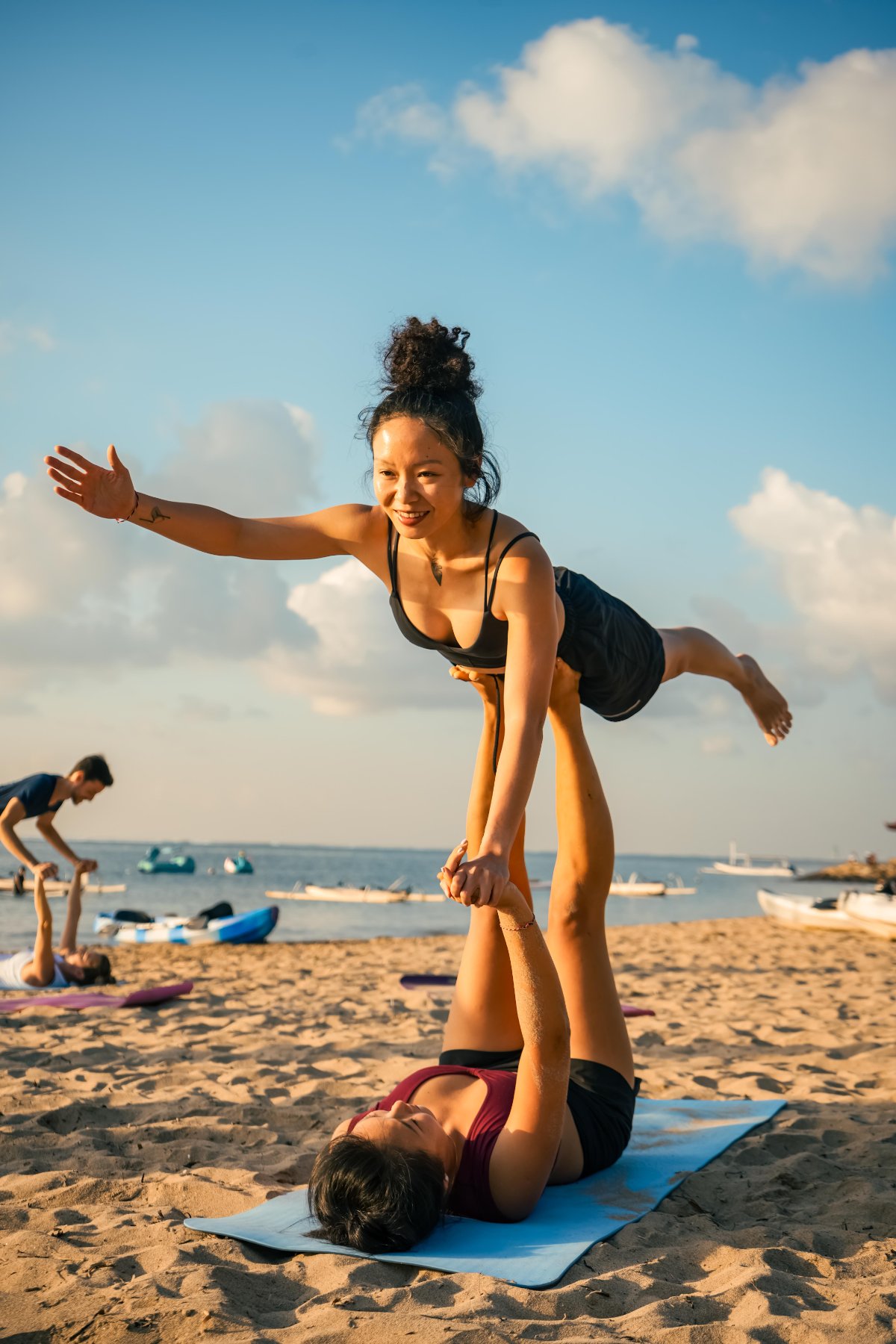
- Acro Yoga
- Iyenger Class
- Ayurvedic Class
- Kirtan Session
Note:- all these additional classes are not part of the course but included additionally
300 Hour Yoga TTC Syllabus
For first two weeks Ashtanga primary series (Yoga Chikitsa) will be practiced which will be led by a teacher and mysore style will be practiced by students to improve their self practice
and for rest of the two weeks Ashtanga Intermediate series (Nadi Shudhi) will be explained and practiced as per the level of students postures will be practiced with appropriate modification.
- On your feet Yogasanas
- Seated Vinyasa Sequences
- Seated posterior stretch sequences
- On one leg yogasanas
- The supine sequence
- The bow pose sequence
- The triangle pose sequence
- The inverted posture sequence
- Meditative pose sequence
- Viseha Vinyasa karma
- Chapter no. 1st
- Chapter no. 2nd
- Introduction applied yoga anatomy
- Anatomical explanation of Asana
- Importance of movements
- yogic Jorney to travel Yoga
- intoduction to skeleton system
- Yogic exploration of bones and joints
- Understanding the joint mobility
- Restriction in Mobility
- Compression
- Introduction to muscular system
- contraction
- tension, tightness, strength weakness of a muscle
- Understanding flexibility & strength
- muscle relaxation technique
- Co - Activation of muscles & Bandhas
- Kulfa, janu, kati,amsa, mani Bandhas
- Musculoskeletal system
- Neuromuscular system
- Anatomical exploration of an exercise or posture
- yogic approach to breathing and circulation
- Diet for a yogic body
- Introduction of Paranayama
- The pranic body
- Annamaya kosha
- Manomaya kosha
- Pranamaya Kosha
- Vijnanamaya Kosha
- Anandamaya Kosha
- Pancha prana
- Natural Breathing
- Yogic breathing
- Nadi shodhana
- Traditional Pranayama
- Different technique of breathing
- Sheetali Pranayama
- Sheetkari pranayama
- Bhramari pranayama
- Ujjayi pranayama
- Bhastika Pranayama
- Kapalbhati Pranayama
- Surya Bheda Pranayama with ratio
- Chandra bhedana pranayama
- Introduction to shatkarma
- Jalaneti Satkarma (Nasal cleansing with salty water)
- Rubber neti (Nasal cleansing with a rubber string)
- Agnisar Kriya
- Nauli Kriya
- Kapalbhati Cleansing
- Kunjal (stomach cleansing)
- Shankha prakshalana (digestive tract cleansing)
- Introduction to bandha & Co activation
- Jalandhara bandha
- Moola bandha
- Uddiyana bandha
- Maha bandha
- Kulph Bandha
- Janu Bandha
- Kati Bandha
- Kurpara Bandha
- Mani Bandha
- Amsa Bandha
- Introduction of Mudras
- Jnana mudra
- Chin mudra
- Yog mudra
- Bhairava mudra
- Nasikagra mudra
- Shambhavi mudra
- Pranav mudra
- Vishnu mudra
- Pancha prana mudra
- Pancha tatva mudra
- Jalaneti
- Fundamentals of Body alignment
- Ashtanga intermediate series postures alignment
- Standing poses
- Seated postures
- Backward extension postures
- Forward extension postures
- Twisting postures
- Inverted postures
- How to do a pose
- What is alignment of a pose
- Common mistakes
- Precautions
- Contraindication
- Benefits
- Modification
- Adjustments
- Why Meditation ?
- Meditation and Brain waves Meditation and its effect on Stress Management
- Obstacles in Meditation
- Role of concentration in Meditation tips for developing concentration Meditation on Body and Breath
- different meditation tecnique
- Om / Mantra Meditation
- Antat and Bahir Dhyana
- Trataka
- Dynamic meditation
- Tips for Silence Meditation
- Japa Meditation
- Ajapa japa
- Antar mouna
- Nada Meditation
- Om Asato Maa Sadgamaya (Mantra from Upanishad)
- Tvameva mata ca pita Tvameva (Sloka on gods)
- Vande Gurunam Charnarvinde (Ashtanga opening mantra)
- Guru Brahma Guru Vishnu Gurudevo maheshwara (Guru stotram)
- Swasti Prajabhyay (Ashtanga closing mantra)
- Tvameva mata ca pita Tvameva (Sloka on gods)
- Om Tryambakam Yajamahe (Mantra on lord shiva)
- Om sahana vavatu (Mantra from Upanishad)
- Om Bhur Bhuva Swaha
- Yogena Cittasya (Sloka on sage Patanjali)
- Hare rama, Hare Krishna ( Maha mantra)
- How to sequence a class
- How to work with breathing and posture to create an appropriate sequence
- How to adjust
- How to work with different level of students
- How to cue / instruct at different level
- Building Positive & conscious communication, Friendship and trust
- Time management
- Qualities of a teacher
- Principles of demonstration, observation.
- Assisting
- Correcting
- Use of voice in class
- Mental & emotional preparation for teaching
- Class preparation
- Step by step class structure planning.
- Written Test
- Asana Practical Test
- Attendance
- Performance
- Behaviour
- Sound Healing
- Acro Yoga
- Iyenger Class
- Ayurvedic Class
- Kirtan Session
Note:- all these additional classes are not part of the course but included additionally
Daily Schedule
Schedule of 500 Hour Yoga Teacher Training Course200 Hour Yoga TTC Schedule
300 Hour Yoga TTC Schedule
- This schedule is tentative and subject to change based on weather conditions and teacher availability
- The subjects and course content will remain the same
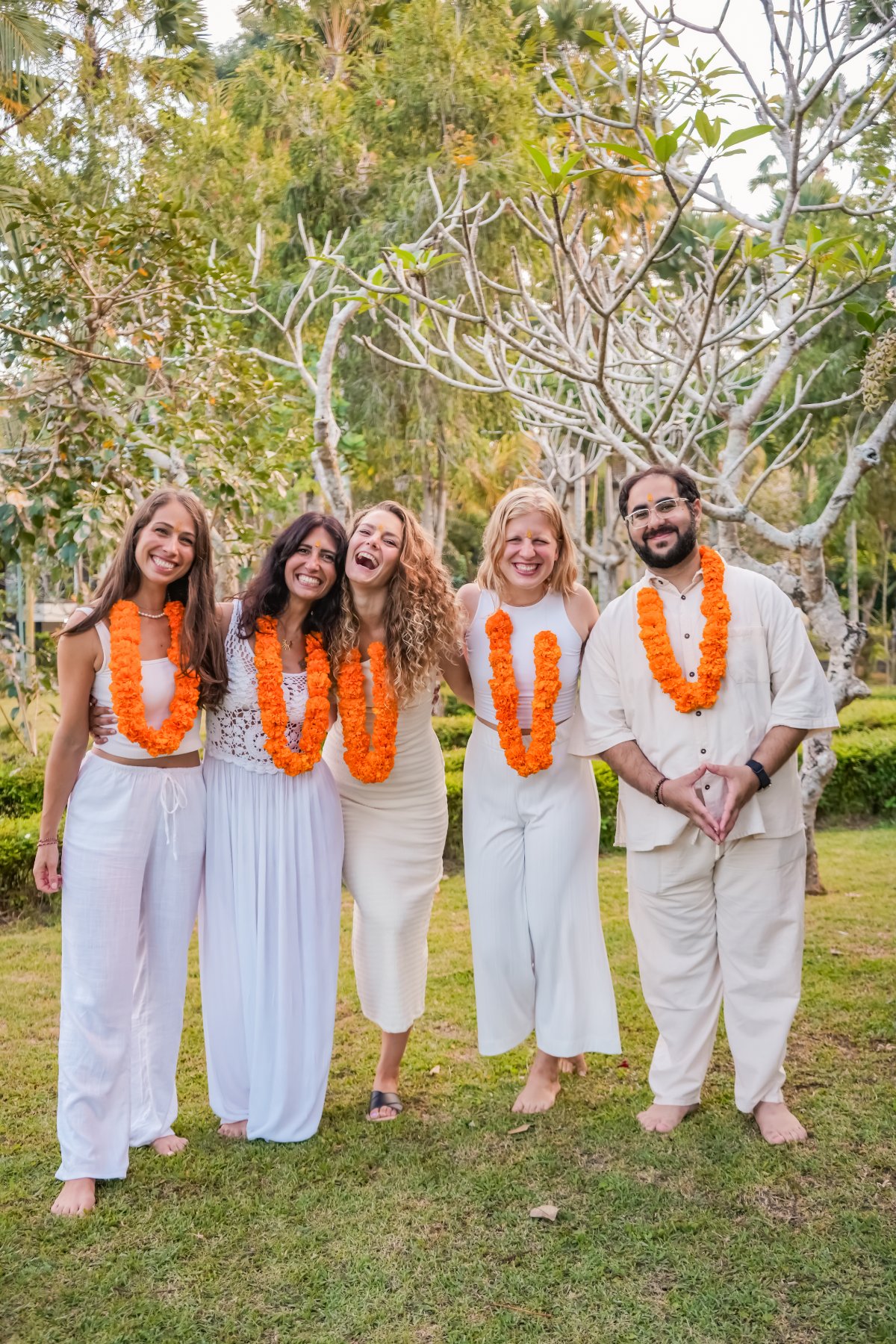
- Please Carry a White Dress For Course Cermony
- As for Yoga gear, we recommend carrying a couple of pairs of leggings or yoga pants and supportive tops, especially if you have a favorite style.
- Pants (for yoga, town, travel, hiking)
- Tops (for yoga, short or long sleeved shirts for other activities)
- Outer layer (sweatshirt or light jacket/fleece)
- Sleepwear
- Sandals or flip-flops
- Please carry a bath towel
- Our schools offer mats however, if you are used to use your own, bring one from home.
- We Provide You All The Course Material
- Carry essentials like deodorants, mosquito-repellents, sanitary towels, these are all you can buy From Nearby Shop locally
- Generally Things Like Soap Or Shampoo You Can Carry With You, Also You can Buy From Here with the nearby Shop.
- Please Carry a White Dress For Course Cermony
- As for Yoga gear, we recommend carrying a couple of pairs of leggings or yoga pants and supportive tops, especially if you have a favorite style.
- Pants (for yoga, town, travel, hiking)
- Tops (for yoga, short or long sleeved shirts for other activities)
- Outer layer (sweatshirt or light jacket/fleece)
- Sleepwear
- Sandals or flip-flops
- Please carry a bath towel
- Our schools offer mats however, if you are used to use your own, bring one from home.
- We Provide You All The Course Material
- Carry essentials like deodorants, mosquito-repellents, sanitary towels, these are all you can buy From Nearby Shop locally
- Generally Things Like Soap Or Shampoo You Can Carry With You, Also You can Buy From Here with the nearby Shop.
Accommodation for Yogi
- 24/7 Hot, Cold Running Water
- Single and Double Sharing Rooms
- Shuttle Service for Pickup Only
- Rooms with Attached Bathroom
- Nature & Eco Friendly Ambience
- Spacious and Ventilated Yoga Hall
- Free Wi-Fi 24/7
- Breakfast, Lunch & Dinner
Private Room


Shared Room


Premises of School


Nutritious Food for Yogi


Enjoy Learning with Our Team
Experienced Yoga Teacher
Yoga Teacher (Lead)
Bhojraj Ji

Philosophy Teacher
Azmi Ji

Pranayama Teacher
Ankit Ji

Alignment Teacher
Rohit Ji
Excursions

Beach Excursion

Balinese Temple Visit

Waterfall Excursion

Nature Walk
Photo Gallery
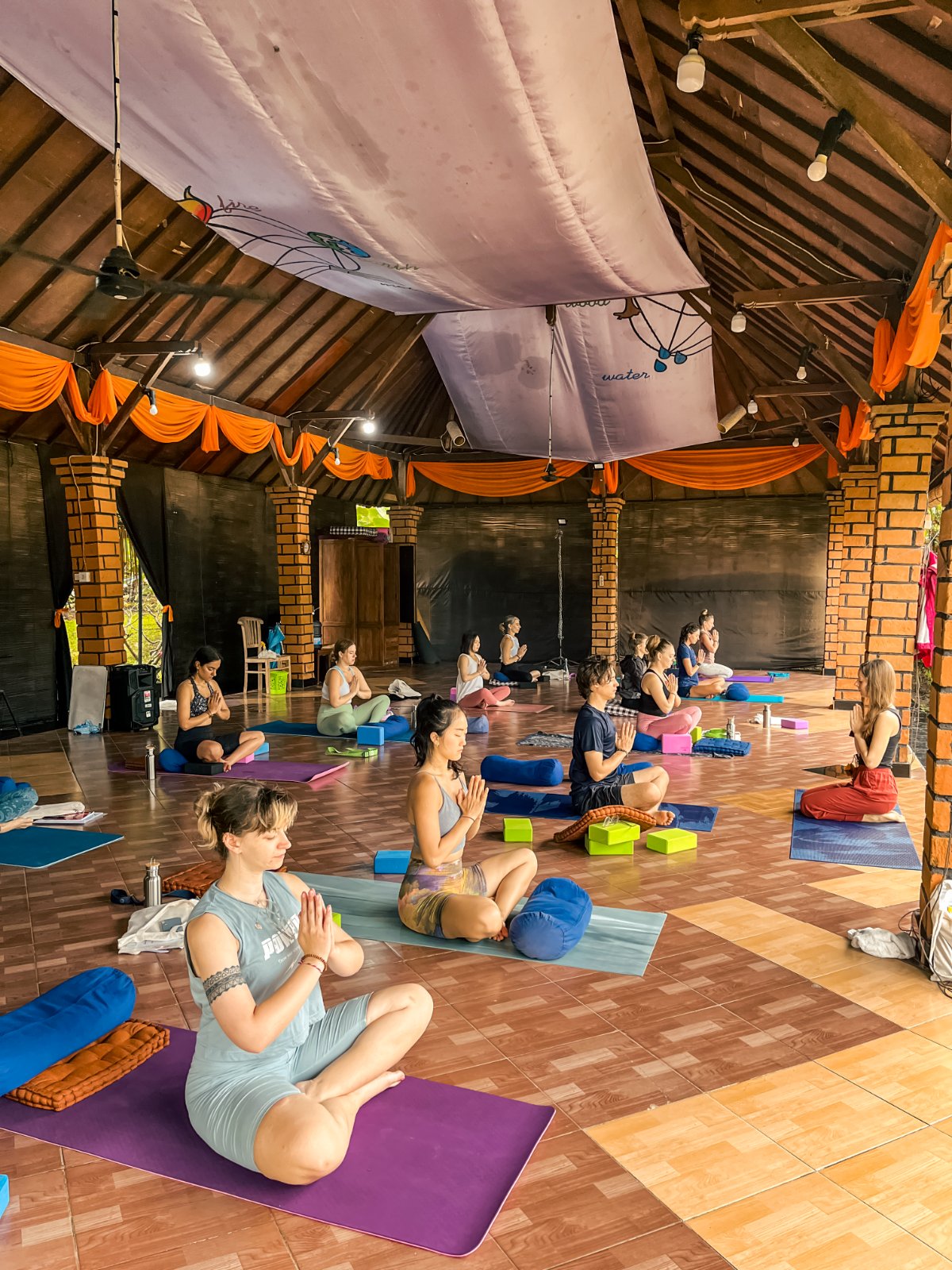
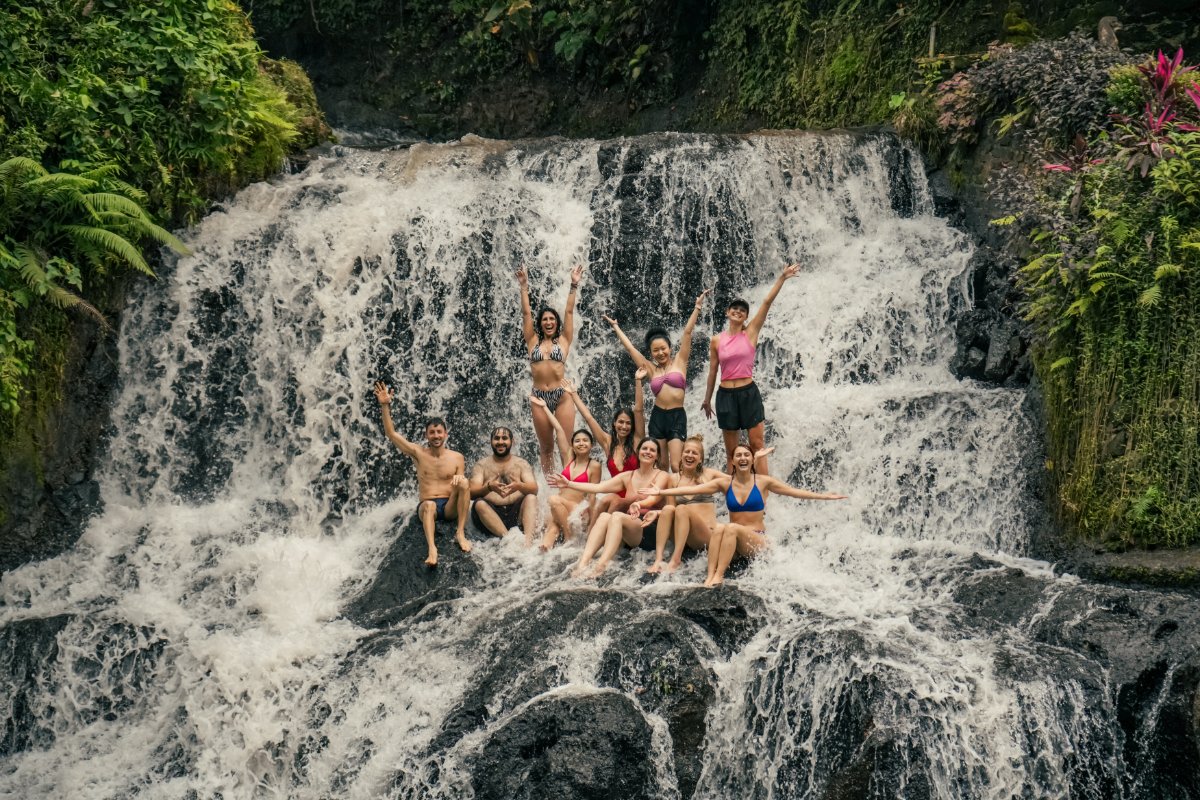
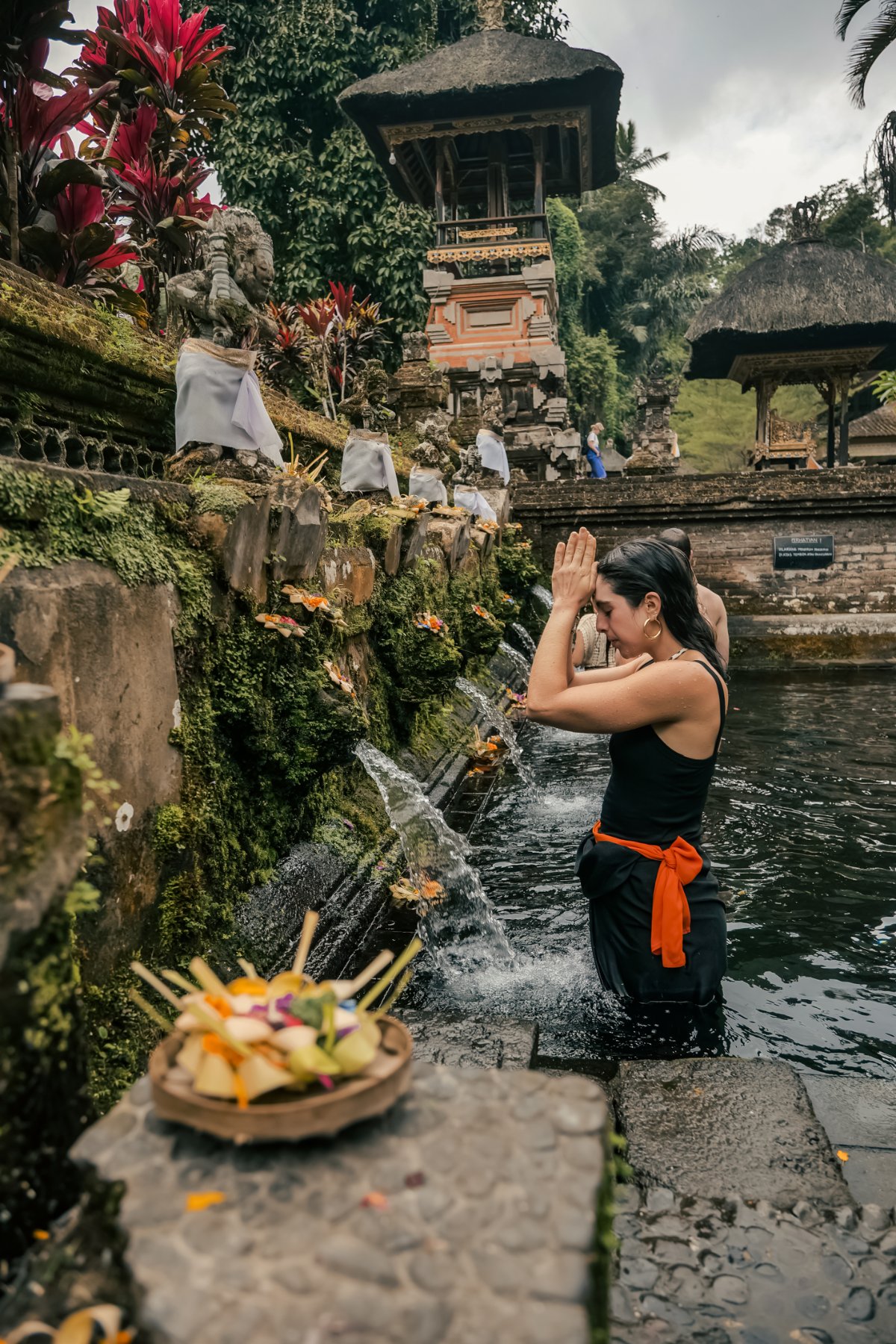
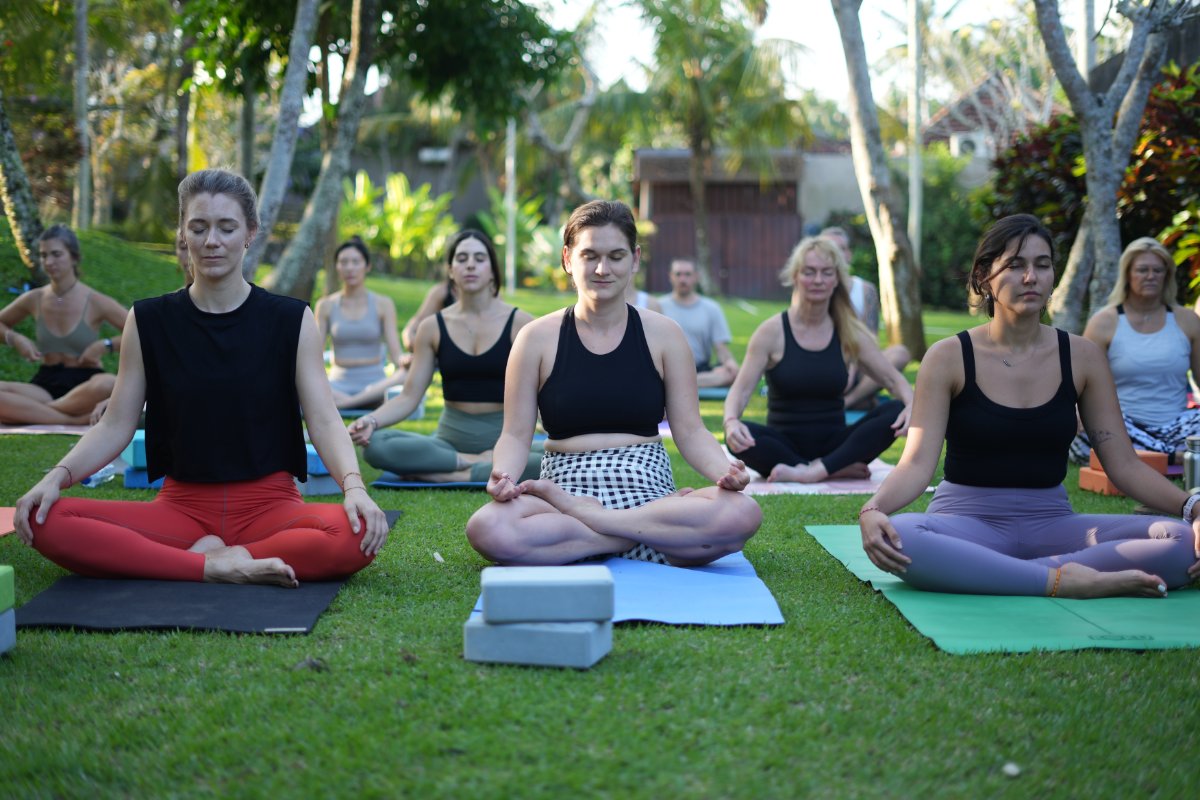
Code of Conduct
Rules and Regulations of AshramRules and Code of Conduct :
- Attending all classes is mandatory except for emergency cases.
- Uninformed leaves will affect student’s monthly performance.
- For good use of the course, the student will commit to dedicating at least two hours to the daily study.
- The teaching materials are protected by copyright and should not be misused
- Classes have their established start time that must be respected at all times.
- Smoking and alcohol are strictly prohibited in the school.
- Inform kitchen staff in advance if you don’t need food to avoid wastage.
- Always maintain discipline, and respect for teachers
- Clear your books of account before departure from Bali Yogpeeth.
- Before departure, return your books, mats or any other school belongings
- The accommodation provided is only for students.
- Relatives can be accommodated in another room at an additional cost.
- Students have to be present in all scheduled programs of Bali Yogpeeth.
Course Fees Terms and Conditions :
- The advance booking amount is Non-Refundable and Non-Transferable to any other person. Cancellation due to any reason will not be accepted and the deposit paid will be forfeited.
- To change the course month, we will need 10 days advance notice to make the required adjustments depending upon the availability of seats.
- If the students cancel the course after joining, the course fees will not be refunded.
FAQs on 500 Hour Yoga Teacher Training
Frequently Asked QuestionsTo complete RYT 500 one has to complete RYT 200 and RYT 300. It can be done back to back or with a gap in between.
200 hr Yoga TTC is for a beginner to an intermediate level practitioner, 300 hr Yoga TTC is for an intermediate to an advanced level practitioner, 500 hr is a combination of both 200 and 300 hr Yoga TTC. If you enroll with us for 500 hr Yoga TTC, it will become a 46 Days long program in which the first month with be 200 hr training and the second month will be 300 hr training.
RYT 500 is the highest level of RYT certification and holds a lot of value in Yoga Alliance. So yes it is totally worth it!
YTT stands for Yoga Teacher Training and RYT stands for Registered Yoga Teacher. YTT is a program that one has to attend to get RYT certified. Both are centrally regulated by Yoga Alliance USA
This can be done by any level of practitioner who is very serious about a career in Yoga. But if you have some background and practise of Yoga that will be an added advantage. A determined practitioner who makes full use of the course will benefit the most from the 500 hr YTT
All teachers are qualified Yogis, some are with PHD degrees of yoga sciences, and some are with MA degrees.
A 500-hour yoga teacher training program is an advanced level course designed for certified yoga instructors who have already completed both a 200-hour and a 300-hour training. It offers an even deeper exploration of yoga philosophy, advanced techniques, and teaching methodologies.
Balis serene and spiritually charged environment makes it an ideal destination for an intensive 500-hour training. Engaging in a program of this nature in Bali allows for profound growth in both personal practice and teaching skills.
A 500-hour program often covers advanced topics such as in-depth yogic philosophy, refined alignment and adjustments, advanced sequencing, therapeutic applications, advanced pranayama and meditation practices, as well as opportunities to specialize in specific areas of interest.
The duration of a 500-hour yoga teacher training program in Bali can vary based on the curriculum and structure. It often spans around 6 to 8 weeks of immersive study, allowing ample time for in-depth exploration.
Typically, participants need to have completed both a 200-hour and a 300-hour yoga teacher training from recognized institutions before enrolling in a 500-hour program. Some programs might have additional requirements or prerequisites, so its important to check with the training center.
Yes, a 500-hour certification from a reputable yoga teacher training program in Bali holds international recognition. It showcases your commitment to advanced training and proficiency in a wide range of yogic practices.
Most training centres offering 500-hour programs in Bali include accommodation options in their packages. This contributes to an immersive learning environment, but you might also have the option to arrange your own accommodations.
Research extensively. Look for renowned instructors, a comprehensive curriculum, reviews from past participants, and specialization areas that align with your interests. Consider the centers location and the opportunities it offers for growth.


