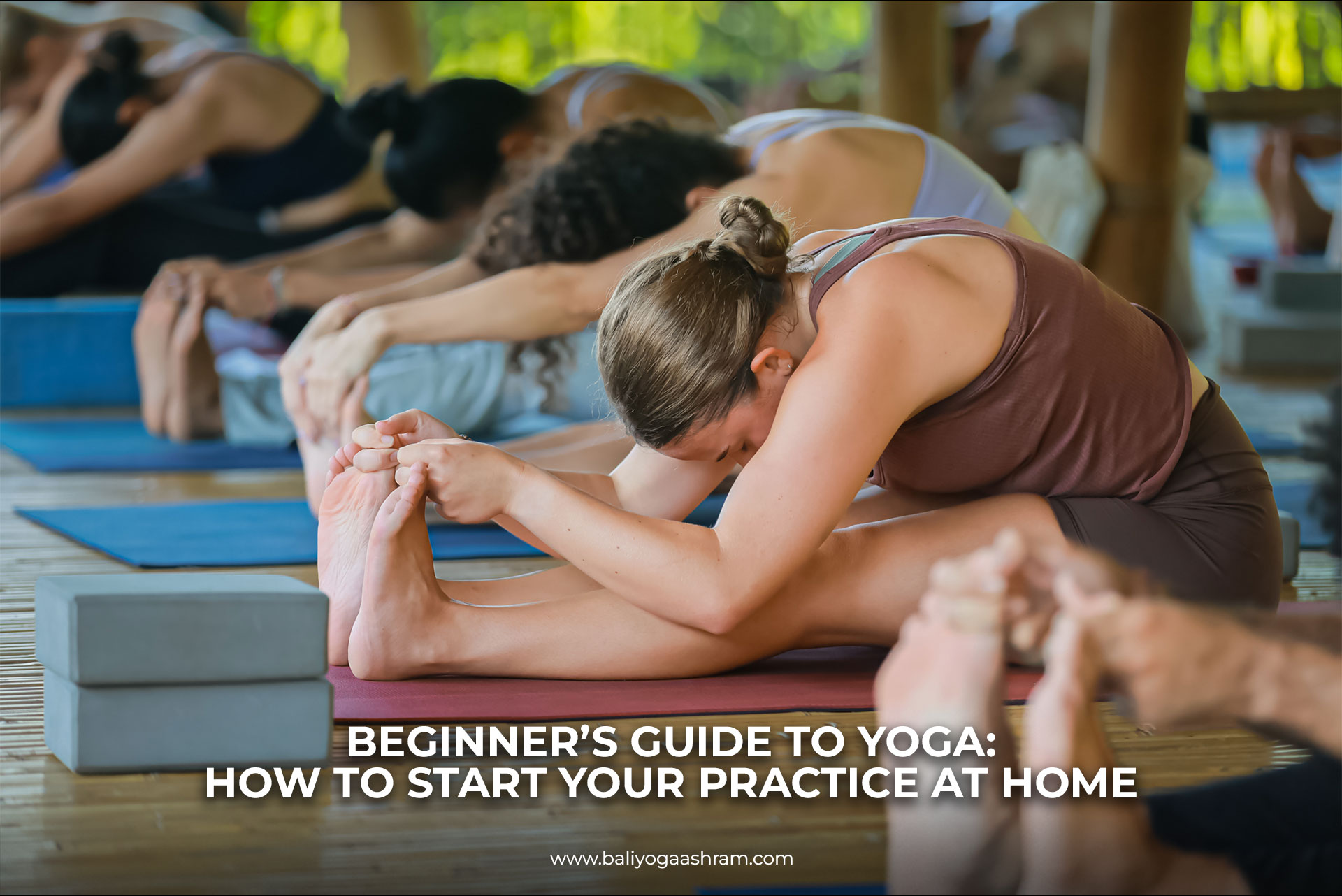
Beginner’s Guide to Yoga is a short and simple introduction to how to start your practice at home. This guide introduces you to the most beautiful as well as beneficial journeys of yoga that helps you to keep yourself healthy and live a happy life without any physical or mental illness as well as make your career as yoga instructor for helping others to stay fit. We would also like you to know that yoga is not about bending or stretching perfectly; it’s about connecting deeply with your breath, your body, as well as your present moment. A beginner’s guide to yoga does not just teach you about learning yoga poses; it also gives you the knowledge and training about how to listen — to your body, your limits, as well as your energy. For just starting yoga as a beginner, you don’t need fancy mats or a good studio. You can start the yoga practice right from where you are at present such as in your living room, balcony, or even your garden with the help of Beginner’s Guide to Yoga. If you are keen to know how to start yoga practice at home, this post will walk you through each and every step slowly as well as mindfully.
Why Start Yoga at Home?
Starting yoga for beginners at home gives them freedom for learning according to them. You don’t have to rush to any yoga school, yoga studio or match someone else’s pace. At home, your mat as well as the small corner of your home become the sacred space for your yoga learning where you meet yourself every day as well as learn new things in simple and small steps everyday. Online platforms also make it easy to access online yoga for beginners, so you have another option to learn safely from certified yoga teachers in Bali and follow a simple structure of learning yoga online in Bali. Whether you prefer short yoga sessions in the morning or calming yoga stretches before bed, a good yoga for beginners always starts with one and only very simple step: showing up on your mat everyday.
Setting Up Your Space
Before you begin your yoga routine for beginners at home, you must take a moment to prepare your space as per your needs. You don’t need anything fancy — just choose a quiet spot at home, a yoga mat, as well as maybe a small candle or soft music if that helps you relax. Keep your phone away or on silent. Yoga is actually your time to pause the noise as well as tune into yourself. Even two steps forward as well as backward are enough to start your practice. Consistency is more important than duration. Even 10 to 15 minutes everyday brings noticeable change if you practice regularly.
Understanding the Basics of Yoga
Before learning basic yoga poses for beginners, it’s necessary for every practitioner or student of yoga teacher training in Bali to understand the actual meaning of yoga. Yoga is not just low intensity physical exercise; it’s a complete routine of living a healthy life. It teaches you balance — not only in your body but also in your thoughts and emotions. When you follow your home practice, the yoga practice doesn’t demand perfection; rather, it asks for awareness. When you perform yoga moves as well as breathe slowly, you shift your attention to the present moment. If you practice yoga for beginners online, take your time to understand the alignment of every pose as well as how your breath supports the movement of pose. Don’t try to perform anything in a hurry. Breathe, observe, and let your body adapt slowly.
Basic Yoga Poses for Beginners
We will now discuss a few beginner yoga poses that are necessary to form a solid foundation for your practice. These are safe as well as effective poses for a basic yoga routine at home.
- Mountain Pose (Tadasana):
This yoga pose develops awareness and improves your body posture. For practicing this pose, stand tall, keep the feet together as well as shoulders in a relaxed position.
- Cat-Cow Pose (Marjaryasana-Bitilasana):
For this pose, come on your hands and knees. Now slowly arch your back and then round your back slowly. Repeat this movement of arching and rounding the back as many times as you feel comfortable. This pose warms up your backbone as well as connects your breath with movement.
- Downward Facing Dog (Adho Mukha Svanasana):
This is a mild stretch movement that strengthens arms as well as legs while calming the mind. If you feel doing this pose tough, keep your knees bent.
- Child’s Pose (Balasana):
In this pose, you need to kneel down and keep your forehead on the mat. This is your rest pose. You can perform this pose anytime you need rest in and after the practice.
- Cobra Pose (Bhujangasana):
For doing Bhujangasana, lie on your belly, lift your chest slowly. Keep your spine (backbone) stretched as well as open. It develops flexibility and relieves stress.
These are a few basic yoga poses for beginners that develop balance, flexibility, as well as focus. You can practice them into a simple yoga routine.
Creating Your Basic Yoga Routine
While starting a simple yoga routine at home, you should begin with warm-up stretches or moves. Practice standing poses such as Mountain or Tree Pose, then flow into seated poses and end your practice with relaxation. Here’s a short example of a yoga routine for beginners at home:
- Deep breathing as well as Warm-up stretches for 2 minutes
- Sun Salutation/Surya Namaskar – perform 3 rounds
- Basic yoga poses – Downward Dog, Cobra, Child’s Pose, Seated Forward Bend etc.
- Meditation as well as relaxation for 5 minutes
Complete your practice session by sitting quietly in meditation or relaxation with your eyes closed. The peaceful feeling you get at the end means yoga working within you.
Tips for Starting Yoga at Home
If you’re feeling yourself not able to start yoga practice at home, here are some tips that you can follow to make sure how to start yoga practice at home:
- Start with simple and small practice. Ten minutes everyday is enough to begin.
- Keep patience as your flexibility will grow over time.
- Follow online yoga for beginners if you need guidance.
- Pay attention to every part of your body. Do not force any pose if that causes pain.
- Keep your yoga practice at home regular. Daily practice creates consistency as well as calmness.
- Breath works as the bridge between body and mind, so breathe deeply.
The Mindset of a Beginner
Every yoga practitioner, no matter how advanced, was once a beginner. Your goal is not to master all poses in a week — it should create a connection with yourself. When you practice basic yoga at home, keep your focus on your journey, not on comparison. It’s okay if you are not able to balance poses or forget a sequence. What matters is showing up and trying again the next day consistently. Over time, you’ll notice that yoga starts shaping not only your body but your mind and emotions too.
The Benefits of Yoga for Beginners at Home
As you keep up your home yoga practice for beginners, you’ll start feeling calm, focused, as well as emotionally stronger. Yoga reduces stress, improves sleep, as well as improves overall well-being.
Practicing good yoga for beginners daily creates discipline, strengthens your muscles, and improves posture. But apart from that, yoga teaches you gratitude — for your body, your breath, as well as your life.
When you include beginner yoga poses in your daily routine, you stretch your body as well as open your heart and clear the mind.
This beginner’s guide to yoga is an invitation — not for becoming perfect, but to start somewhere. Whether you learn yoga for beginners online with the help of Bali Yogpeeth or follow your simple yoga routine at home, Yoga is about being aware of your body, mind as well as yourself. Your home can be your best yoga studio, and your heart — your greatest teacher.
Q1. How to start yoga at home as a beginner?
Start yoga at home as a beginner with simple as well as small practice of yoga poses. 5 to 10 minutes of practice everyday is enough in the beginning. Your flexibility will grow over time as well as your yoga practice at home becomes more polished. You can also follow online yoga for beginners for proper guidance.
Q2. What are common yoga mistakes?
One of the very common mistakes that beginners make is holding their breath when they try to perform the pose correctly or try to balance. Holding the breath improperly prevents the free flow of energy as well as creates stress and tension.
Q3. What are the Dos and Don’ts of yoga for a beginner?
Do’s: Pay attention to your body, mindful breathing through the nose, consistent practice every day, warm up before starting the practice, and completion of the practice with a cool-down and relaxation.
Don’ts: Don’t push yourself into any yoga pose if you feel pain, do not compare yourself to others, do not overstretch any pose or breath, do not have a heavy meal just before or after the practice.
Q4. What is the most common injury in yoga?
“The most common injury that a person can face while doing yoga practice is lower-back injuries. The other injuries which are common in yoga are the neck, wrists, knees as well as shoulders injuries.
Q5. What is the best advice for a beginner in yoga?
The best advice for a beginner in yoga are:
Release your Expectations. Start your practice with acceptance as yoga is more than just a form of physical exercise. Try to understand Yoga deeply. Learn Basic Yoga Poses as well as practice breathing techniques properly as well as join beginner classes.